
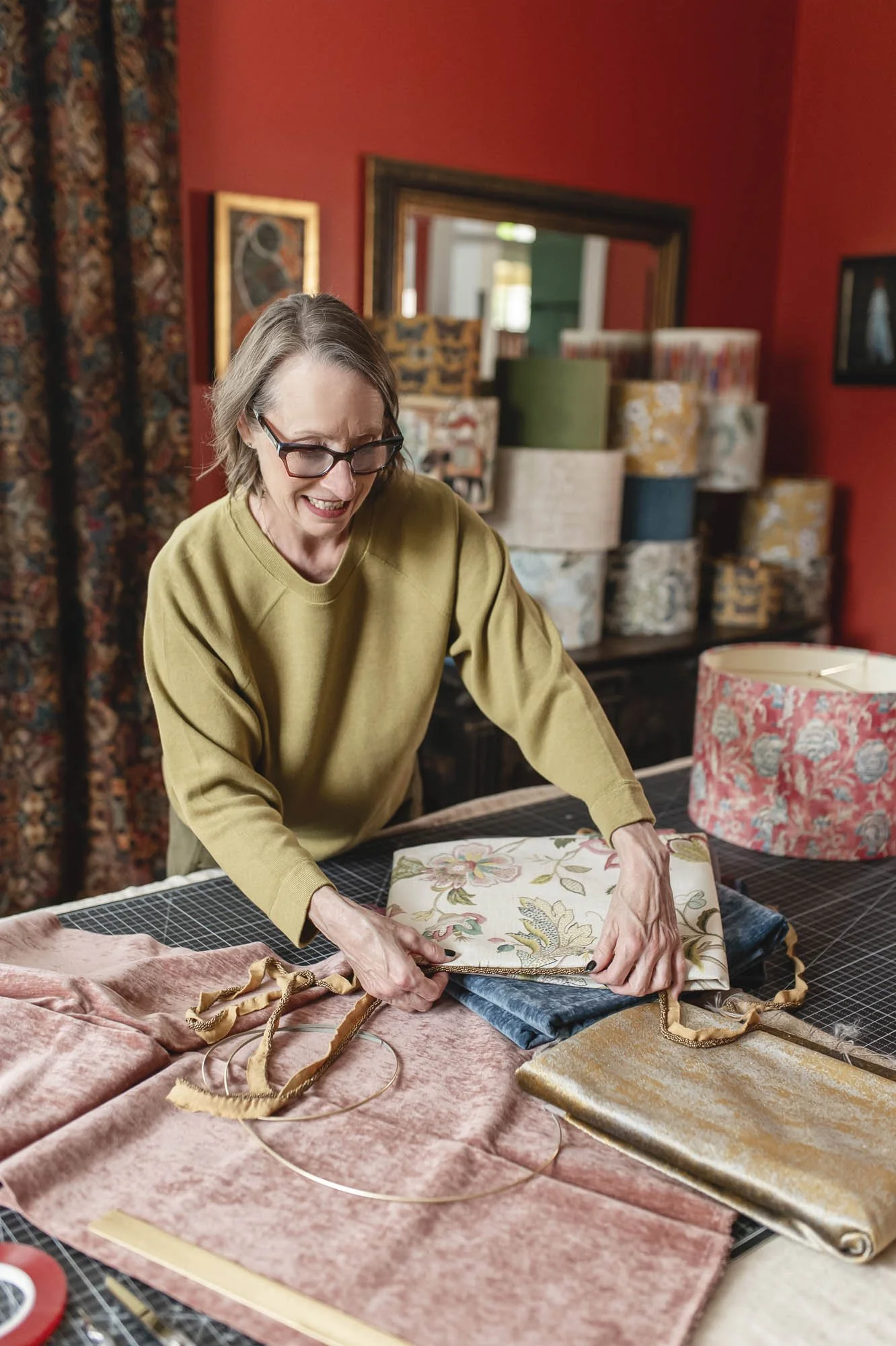
How it works
The Bespoke Process
A lampshade commission might begin with a lamp base you love but can't find the right shade for. With a room that feels almost finished, with a fabric you want to carry into the lighting, or with a space that needs something to anchor it.
Whatever your starting point, the process begins with a conversation about your lamp, your room, and the atmosphere you want to create.
Begin Your Bespoke Commission
4-step process
-
Tell Brenda about your lamp and your room. Share photographs, fabric swatches, and paint colors. The more context she has, the more considered the result.
Cost estimates are provided as part of the design conversation — so you'll always know what to expect before committing.
Not sure what to include? A full guide to measurements and photographs is available here.
-
Each shade involves four elements: size, shape, fabric and lining, and trims. Brenda will guide you through each one.
Size and proportion are established first, often using a simple cardboard mock-up to confirm what feels right before any materials are ordered. The mock-up process takes minutes, removes guesswork, and protects your investment.
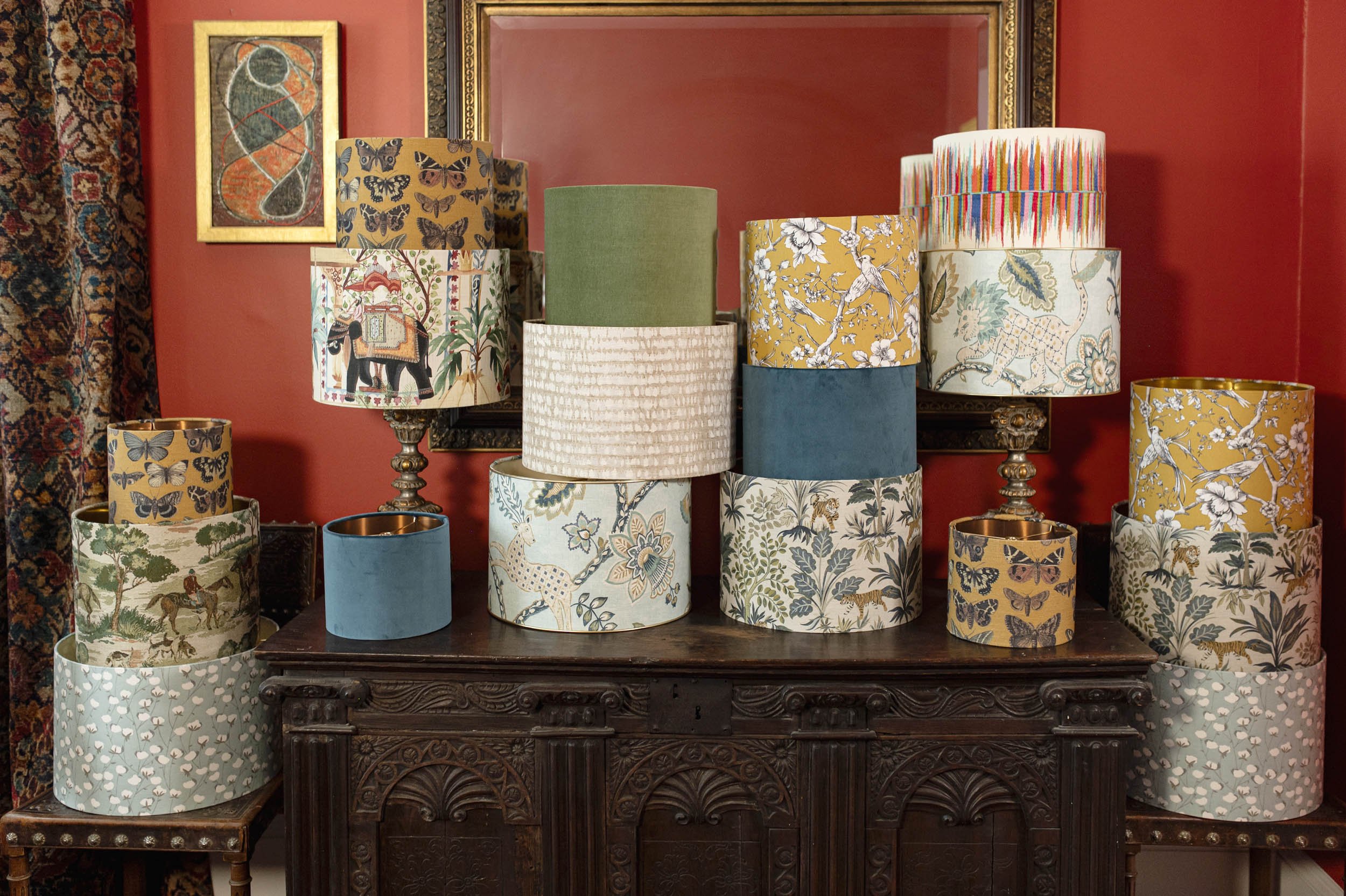
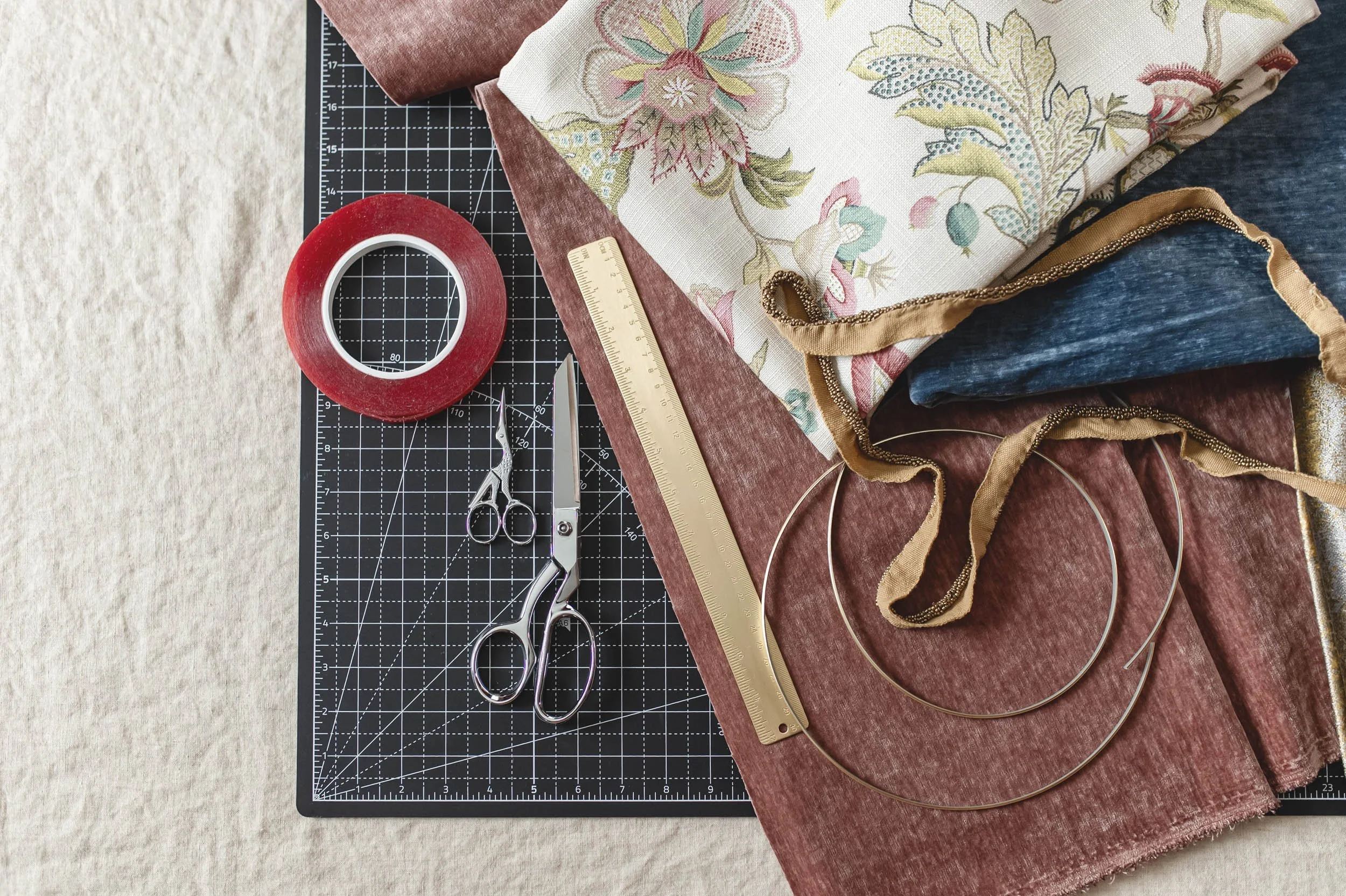
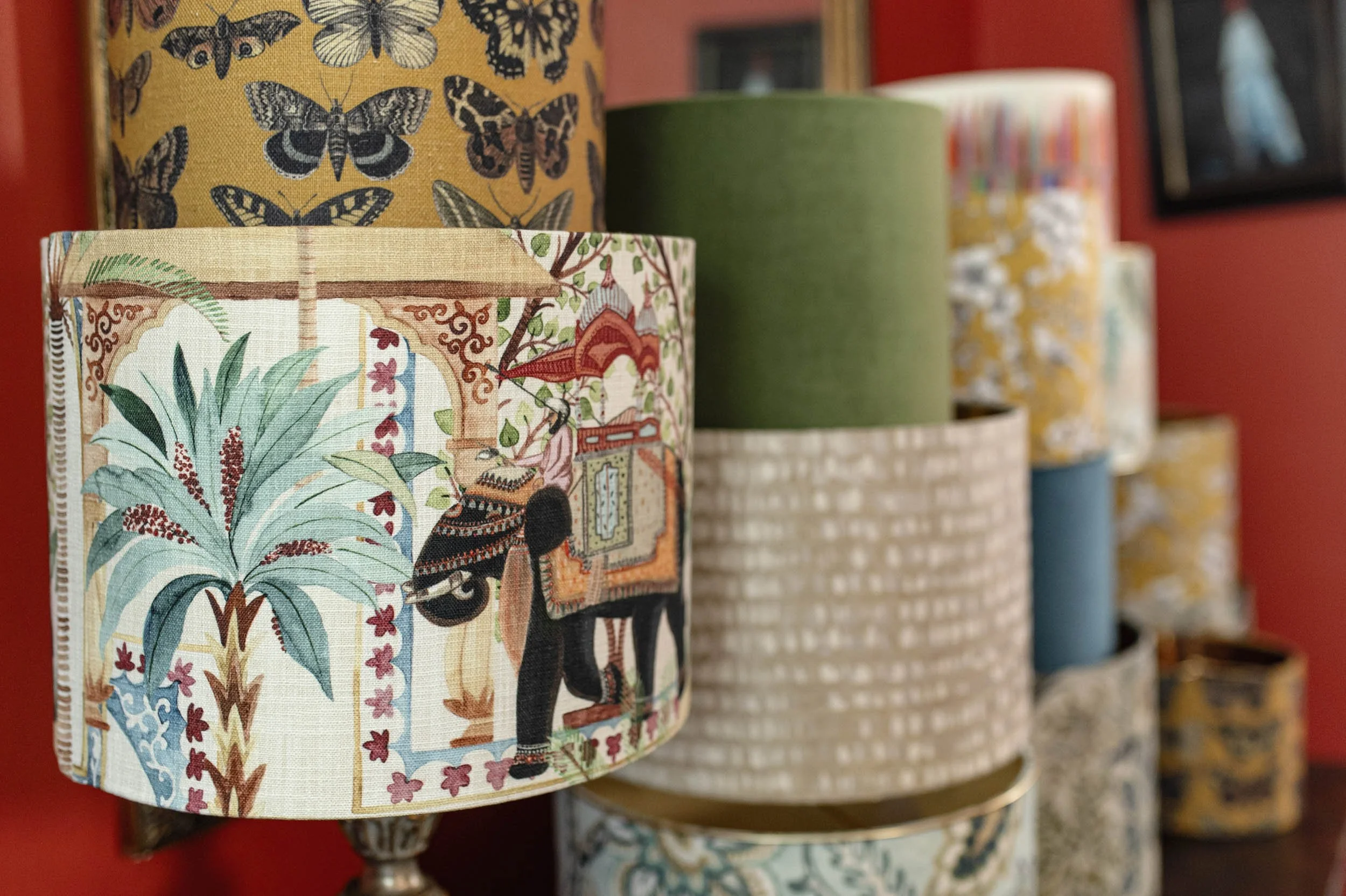
From there, fabric and lining are chosen not just for color and texture, but also for how they behave. A patterned exterior on a coordinating interior. A solid shade on a metallic lining. Trims that frame the light, elevate a restrained scheme, or create an intended touch of drama.
-
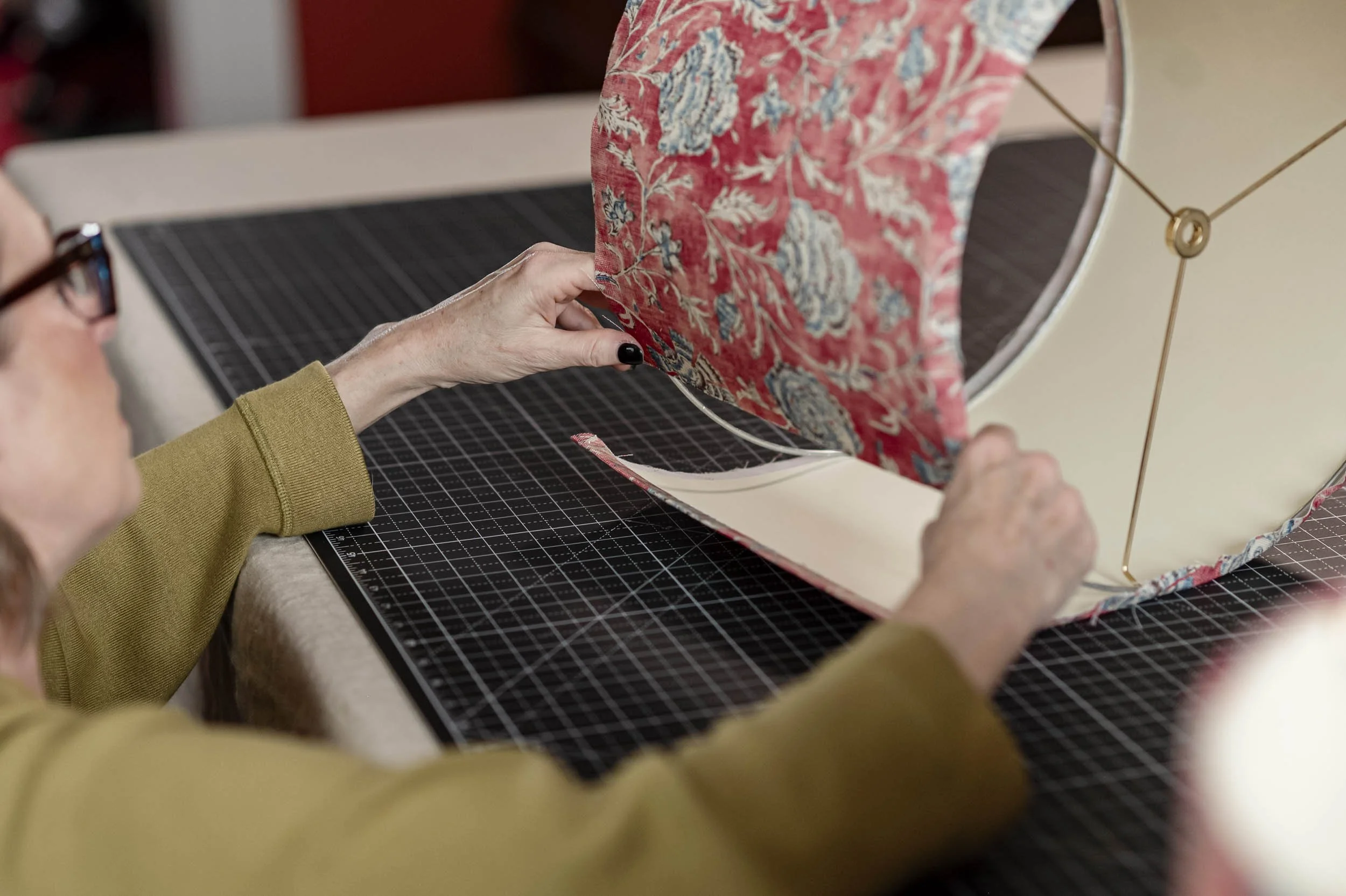
Once the design is confirmed and a 50% deposit received, materials are ordered and hand-crafting begins. Each shade by hand, each one entirely its own.
Commissions typically take four to eight weeks.
-
When your shade arrives and takes its place, it will be right.
Not because it matches — but because it belongs. To the lamp. To the room. To the way the light falls at the end of the day.
About Brenda
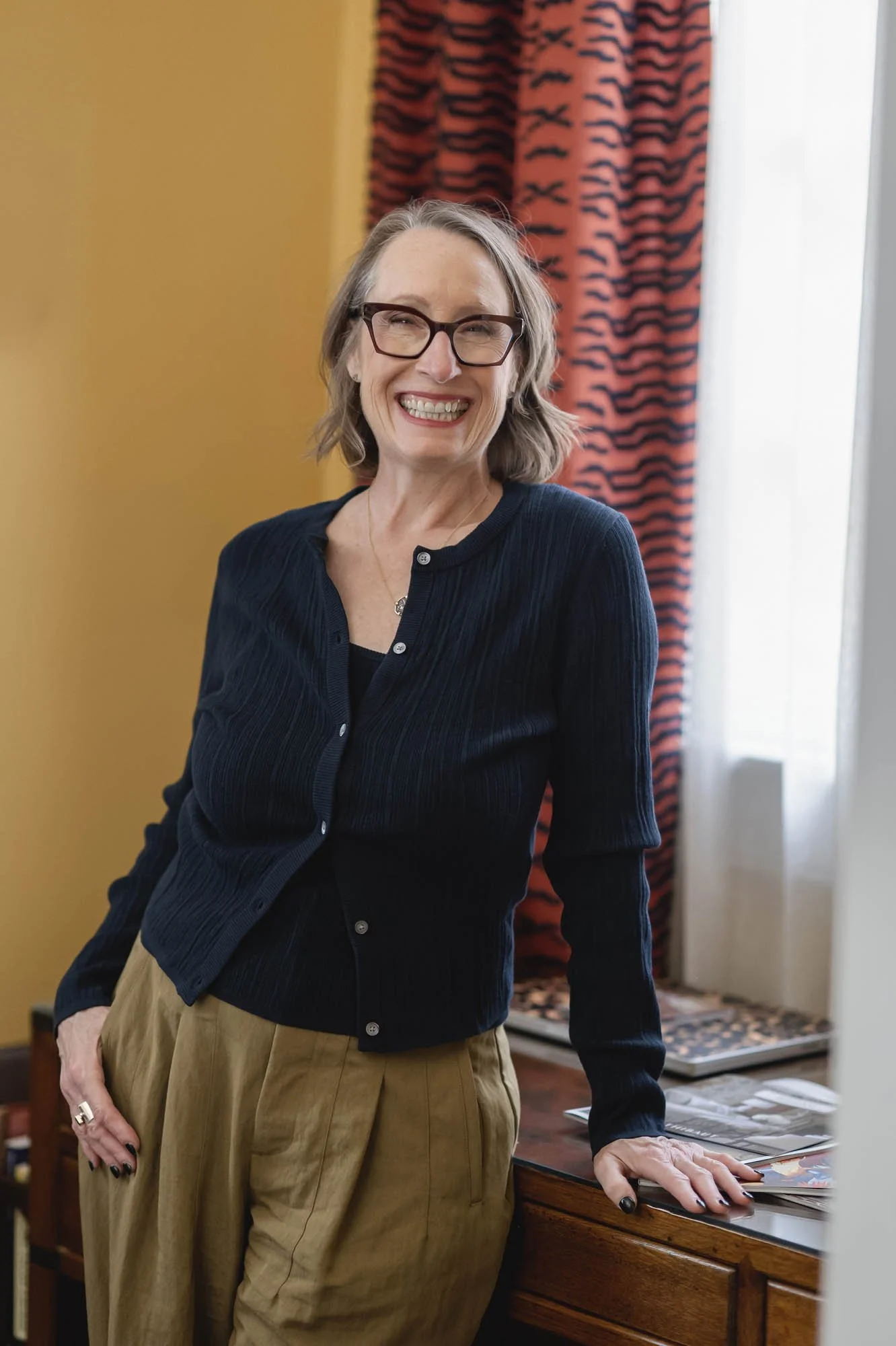
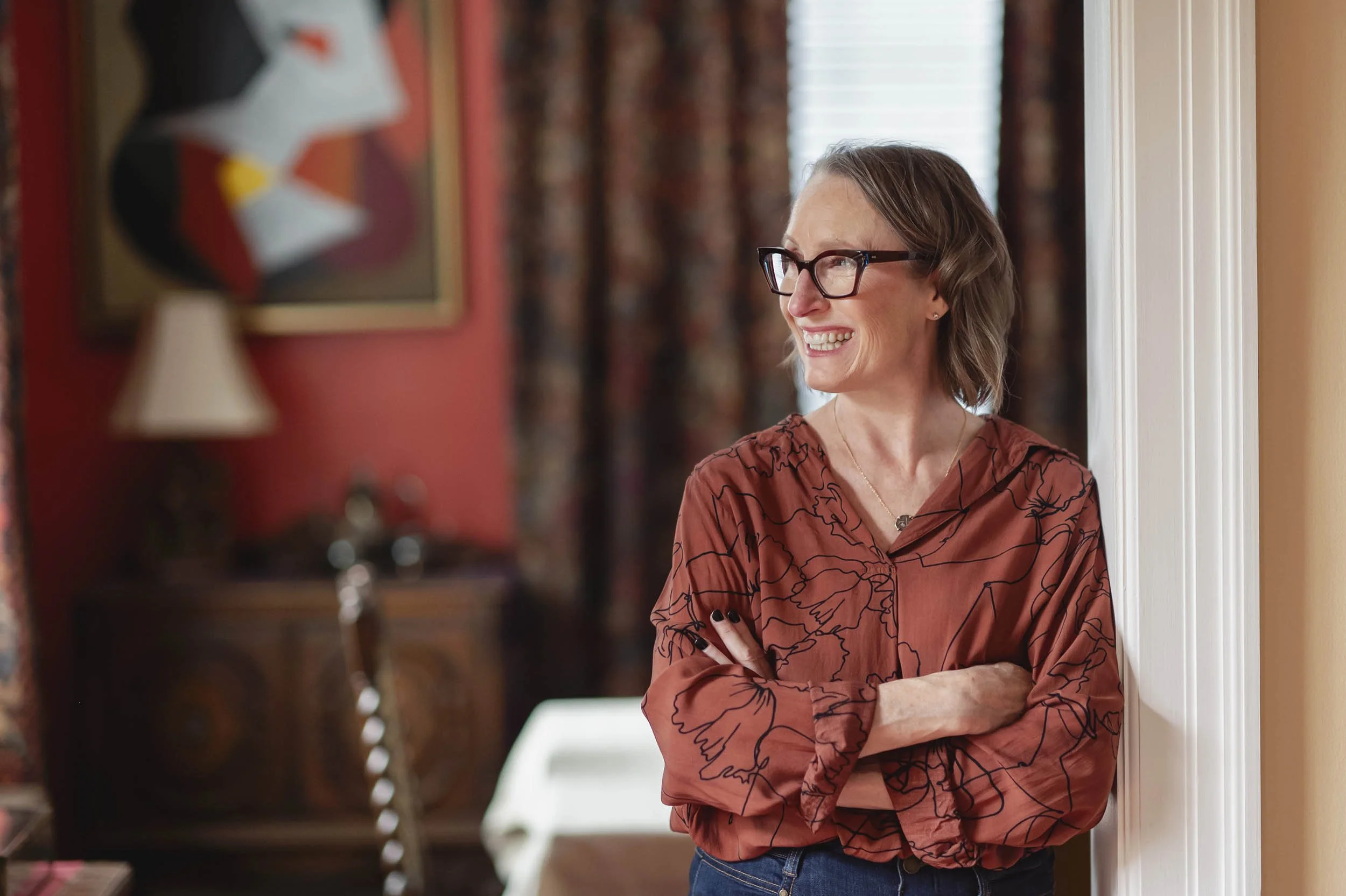
Lamplit Atelier grew from Brenda’s deep appreciation for the way textiles shape a lived environment. From layered English interiors rich with brocade, wool, and plaid, to the vibrant weaves and embroideries of North Africa and South America.
These varied influences, and hands-on engagement with soft furnishings in her own home, led Brenda to consider the particular role a custom lampshade can play: not as an afterthought, but as a considered element in a layered composition.
At the heart of her process is the belief that proportion, palette, and texture work together. That lighting, thoughtfully handled, is the detail that makes a space feel complete.
Frequently asked questions
-
The more context Brenda has about your lamp and your room, the more considered the result.
The following details are helpful:
For table and floor lamps:Photographs of the lamp without a shade, taken level with the center of the base — not from above
Lamp measurements: width at widest point; height of base from bottom to top (excluding neck, socket, and harp hardware); neck height if any; socket and harp hardware height; total lamp height
If the lamp sits on a narrow table, include the table dimensions — to ensure the shade won't extend beyond the table footprint
For pendants:
Room dimensions (length × width)
If the pendant will hang over a dining table, table dimensions (length × width)
For all projects:
Photographs of the room the lamp will inhabit
Photographs or swatches of existing fabrics and paint colors — in the target room and any adjacent spaces
Lighting intent: will the lamp be used for mood lighting or for general illumination? Will it be the room's primary light source or an accent?
-
Yes — collaborations with designers are welcome! Interior designers bring a holistic view of a space that can elevate the result, and we are happy to work within the broader design process from specification through to fulfillment.
Trade enquiries are welcome.
-
Size and proportion are established early in the process.
General sizing guidelines for table lamps, floor lamps, and pendants can provide a useful starting point, but rules of thumb are just that. Sometimes departing from standard proportions better serves both the lamp and the room.
A few factors that can affect sizing:
Certain fabric patterns favor a minimum or maximum shade height, which may interact with the proportional relationship between shade and lamp base
Maximum ring diameter may be constrained by fabric bolt width — rings larger than 16" require bolts with at least 52" of usable width or railroaded fabrics
Shade height should be considered in relation to the decorative neck on the lamp base, if any
The bulb should sit centered both vertically and horizontally within the shade — harp height can be adjusted or extenders added if needed
Before materials are ordered, Brenda asks clients to create and photograph a simple physical size reference — an existing well-proportioned shade or a cardboard mock-up. This process takes minutes, removes all guesswork, and protects your investment.
-
The custom lampshade process begins with a conversation to discuss design and receive a cost estimate. Get in touch.
Upon finalization of the design and payment of a 50% deposit, materials are ordered and hand-crafting begins.
When your shade is complete, the balance due will be requested, after which the shade will be shipped or delivered.
-
Custom orders typically run four to eight weeks, depending on material availability and studio schedule. Timelines for larger project orders are discussed at the outset.
-
Throughout the continental United States.
For additional questions, please see our FAQ page.